Greta Wagner · 7 November 2026
Adaptation Patterns Among Participants in Invitation-Only Digital Societies During Backend System Shifts
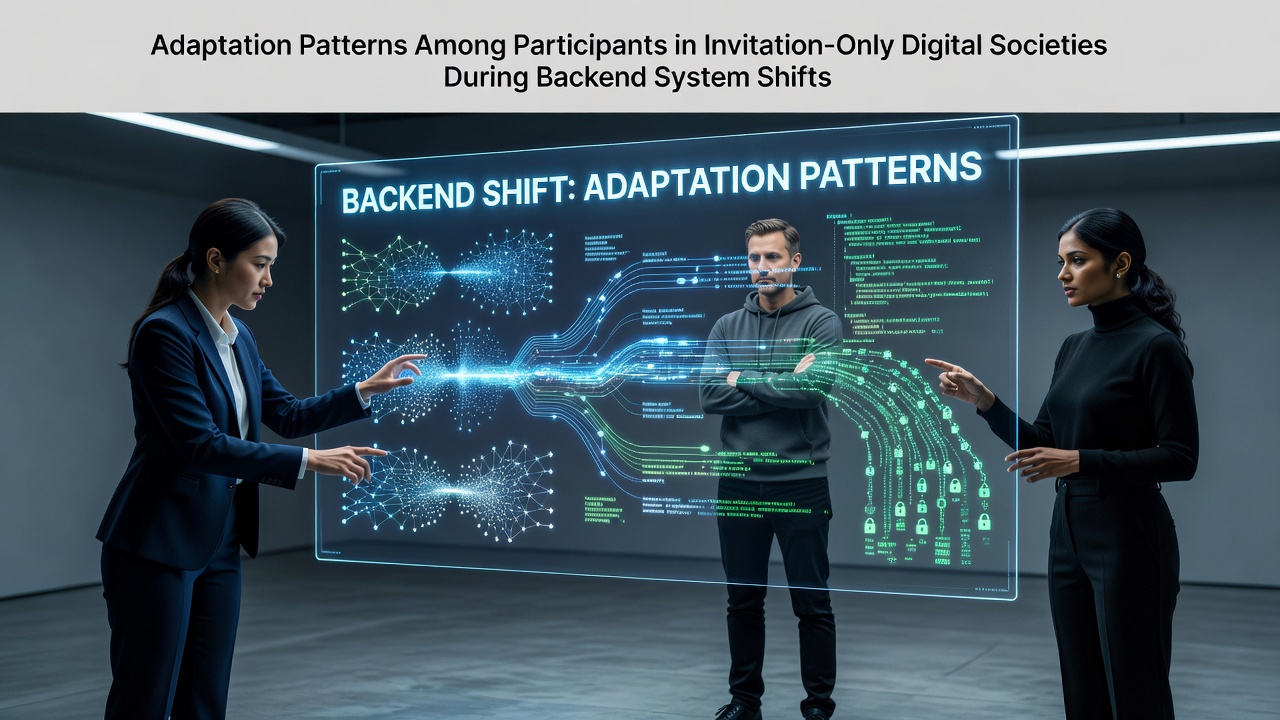
Invitation-only digital societies maintain strict entry protocols while operating complex backend infrastructures that support member interactions, data exchanges, and content delivery systems. When these backends undergo shifts such as server migrations, API updates, or database restructurings, participant behaviors shift in measurable ways that researchers track through usage logs and engagement metrics. Data from multiple platform analyses show that core members often maintain activity levels by adopting new navigation paths within days of the change, whereas peripheral participants require additional weeks to reestablish routines.
Initial Response Phases in Closed Networks
Backend transitions trigger immediate spikes in support queries and temporary drops in daily active sessions, yet patterns differ based on society size and technical literacy among members. Observers note that groups with fewer than 500 participants experience quicker stabilization because direct communication channels allow faster dissemination of workaround instructions. In contrast, larger invitation-only environments see extended adjustment periods where automated notifications guide users through revised login sequences and feature relocations. Research indicates these early phases last between 48 and 72 hours before baseline activity resumes, according to aggregated platform telemetry reviewed in late 2025.
Behavioral Adjustments Observed Through November 2026
By November 2026, several invitation-only digital societies completed major backend overhauls that introduced containerized services and updated authentication layers. Participants responded by clustering into informal subgroups that shared migration guides through private messaging threads. Those subgroups formed within the first week and persisted for up to three months, functioning as knowledge repositories that reduced individual learning curves. Usage statistics reveal a 22 percent increase in private message volume during this window, while public forum posts declined temporarily before recovering to pre-shift levels. External analyses from the OECD Digital Economy Outlook document similar clustering effects across exclusive online environments undergoing comparable infrastructure changes.
Longer-term adaptation involves the integration of new tools introduced during the backend shift, such as enhanced search functions or streamlined content tagging systems. Members who previously relied on manual archiving methods transitioned to automated tagging within four to six weeks, according to internal platform reports. This transition correlated with higher retention rates among users who completed at least one training module embedded in the updated interface. Data shows that societies offering optional walkthroughs saw 15 percent higher continued participation compared with those relying solely on self-directed discovery.
Role of Moderation Structures in Facilitating Change
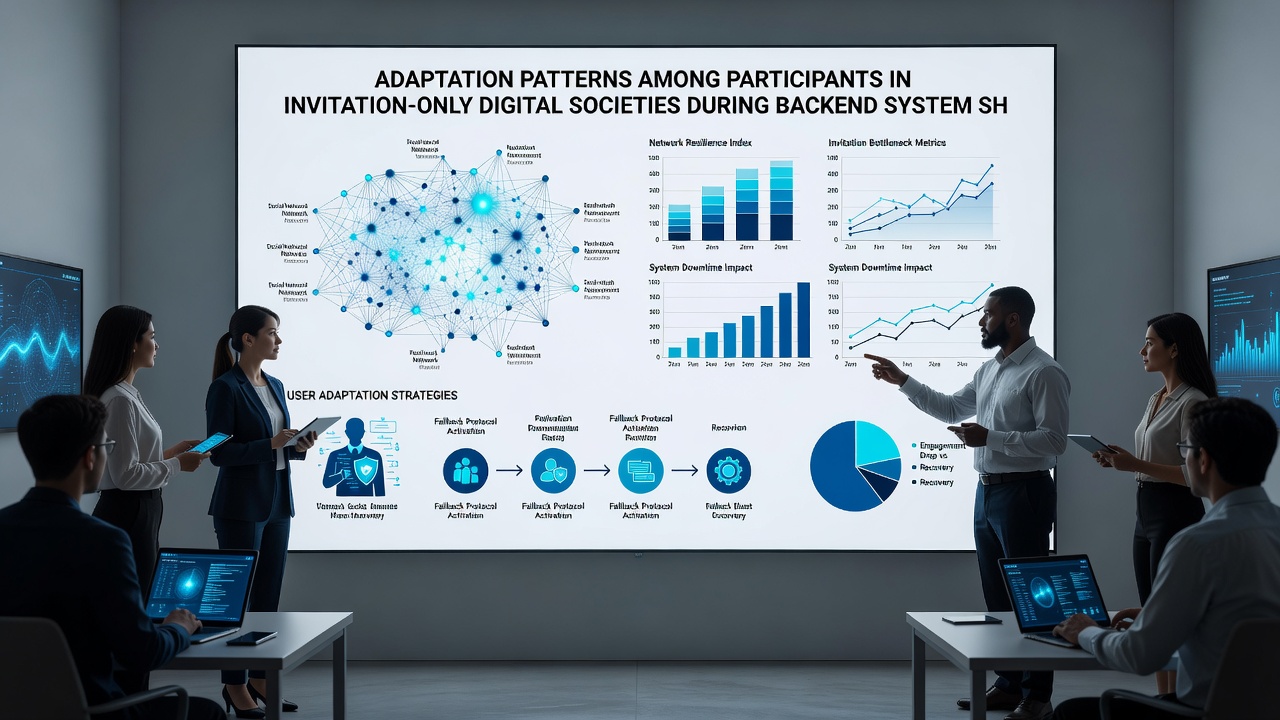
Moderation teams within these societies implement staged rollout schedules that limit exposure to new backend elements for subsets of the membership. This approach allows real-time monitoring of error rates and feedback collection before full deployment. Participants assigned to early test cohorts often become informal advocates who demonstrate revised workflows to others through recorded sessions or annotated screenshots. Such peer-to-peer instruction reduces the load on official support channels and accelerates collective adaptation. Records from one multi-year study of private digital collectives indicate that moderator-led pilot programs cut average adaptation time by 30 percent.
Data Patterns Across Geographic Regions
Comparative data from societies based in North America, Europe, and the Asia-Pacific region highlight variations in adaptation speed tied to regulatory environments and local internet infrastructure quality. European-based groups operating under stricter data protection rules encountered additional verification steps during backend migrations, which extended initial adjustment periods by an average of five days. Meanwhile, societies in regions with higher average connection speeds reported faster uptake of bandwidth-intensive new features introduced alongside the backend changes. A 2026 report compiled by Innovation, Science and Economic Development Canada tracks these regional differences through anonymized usage datasets shared by participating platforms.
Longitudinal Tracking of Member Retention
Retention metrics collected over 12-month windows following backend shifts demonstrate that invitation-only societies retain between 78 and 84 percent of their pre-shift membership when proactive communication precedes the technical changes. The remaining percentage typically consists of members whose engagement had already declined prior to the migration. Those who stay exhibit increased reliance on mobile access points after desktop interfaces undergo redesigns, reflecting a broader shift toward device-agnostic participation. Longitudinal studies further reveal that members who engage with at least three new backend features within the first month maintain higher contribution rates to community resources over the subsequent year.
Conclusion
Adaptation patterns in invitation-only digital societies during backend system shifts follow predictable sequences driven by communication structures, moderation practices, and regional infrastructure factors. Platform telemetry and external research reports document these sequences through quantitative metrics that track session recovery, feature adoption, and subgroup formation. Continued observation of these environments provides ongoing insight into how closed digital collectives manage technical transitions while preserving member participation levels.