Wendy Wagner · 10 October 2026
The Evolution of Resource Sharing Mechanisms in Closed Digital Collectives After Infrastructure Upgrades
Closed digital collectives have long relied on coordinated systems for distributing files, data sets, and computational resources among verified members, and infrastructure upgrades have repeatedly altered those patterns since the early days of private networks. Researchers tracking these groups note that initial upgrades often centered on bandwidth expansion and server migration, which in turn prompted shifts from basic peer-to-peer protocols toward more structured allocation layers. Data from multiple collectives shows that after hardware refreshes in the mid-2010s, sharing efficiency rose when new indexing tools replaced manual cataloging methods, allowing members to locate and transfer large archives without repeated authentication steps.
Early Shifts Following Hardware and Network Modernization
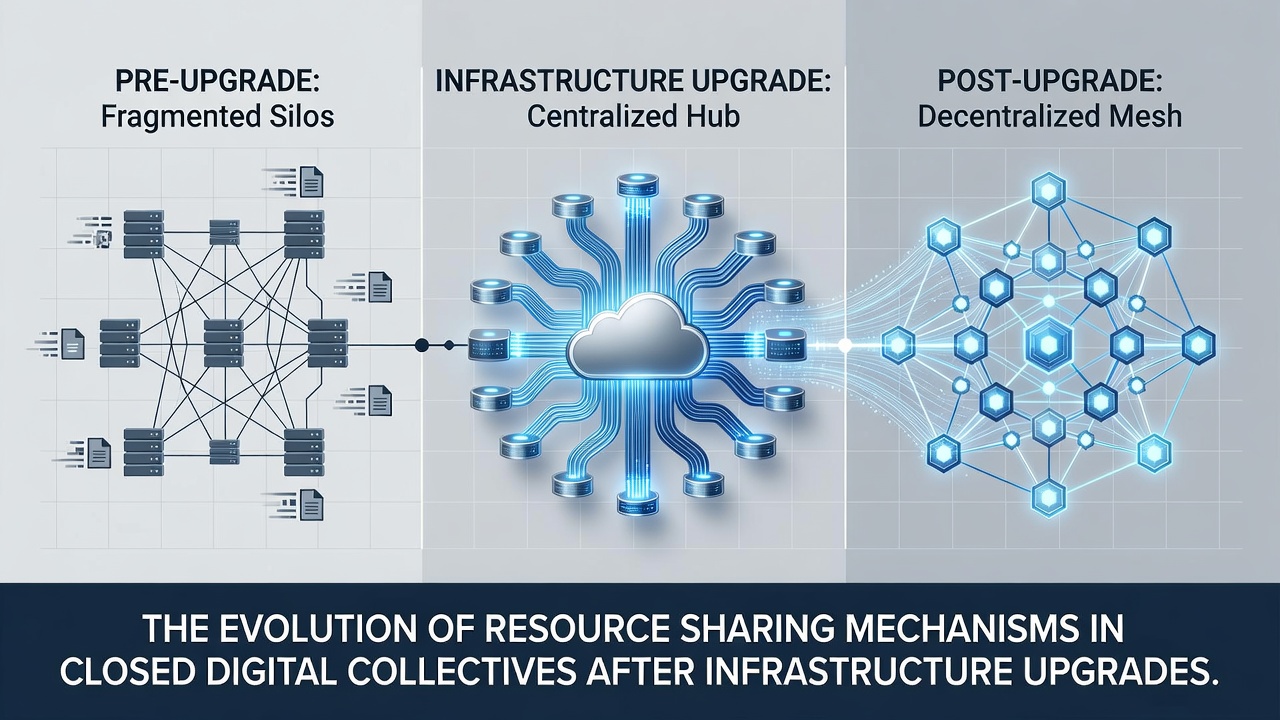
Collectives that migrated to virtualized servers during 2018 through 2020 encountered immediate changes in how resources moved between nodes. Older torrent-based exchanges gave way to containerized distribution models that isolated user sessions while maintaining collective access logs, and this transition reduced downtime during peak demand periods. Studies conducted by academic teams at institutions in Canada and Australia indicate that latency dropped by measurable margins once redundant storage arrays replaced single-point servers, yet access policies required simultaneous updates to prevent unauthorized entry.
By October 2026 several long-standing collectives had completed second-wave upgrades that incorporated distributed ledger components for tracking resource contributions. Those ledgers recorded each upload and download event in immutable entries, which replaced earlier spreadsheet-style logs and enabled automated credit systems that rewarded consistent sharers with priority bandwidth. Observers documented that this approach scaled more effectively when member counts exceeded several thousand, because manual moderation became impractical.
Integration of Automated Allocation Tools
Software layers added after cloud migrations introduced rule-based engines that monitored available storage and routed requests to the least-loaded nodes. These engines drew on real-time metrics collected from each collective's internal network, and they adjusted priorities according to contribution history rather than simple first-come-first-served queues. Figures compiled by research groups in the European Union reveal that such automation cut average wait times for large file transfers by roughly forty percent in collectives that adopted the systems early.
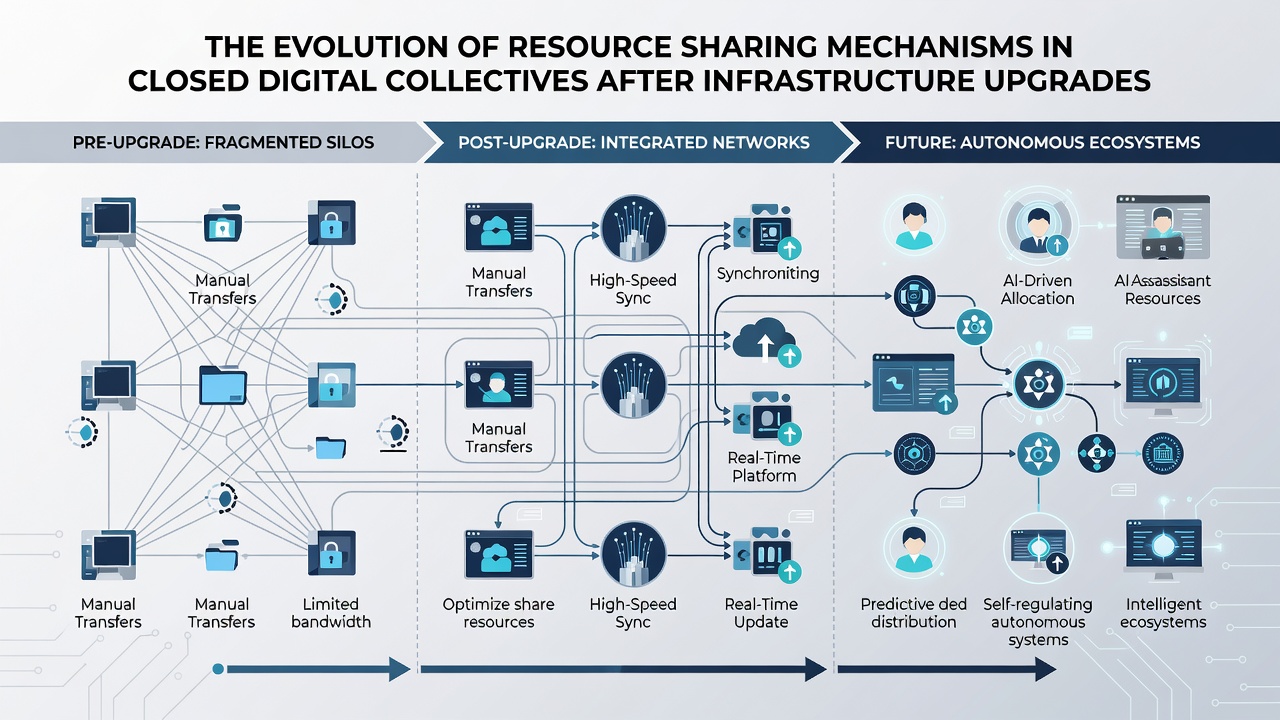
Yet the same upgrades also required collectives to revise membership verification procedures, since automated tools demanded reliable identity markers to prevent duplicate accounts from inflating credit balances. Many groups responded by linking access keys to hardware fingerprints and encrypted tokens, a step that tightened control while preserving anonymity within the collective itself. Industry reports from organizations focused on digital infrastructure note that these verification changes coincided with broader adoption of zero-trust frameworks across private networks.
Case Examples of Post-Upgrade Adaptation
One collective that manages scientific data sets completed an infrastructure refresh in late 2024 and subsequently introduced a tiered sharing model in which high-value datasets moved through dedicated channels reserved for members with proven upload ratios. This model emerged after earlier egalitarian queues proved insufficient once storage capacity tripled. Another group handling media archives replaced its legacy FTP servers with an object-storage backend that supported parallel downloads, and the change allowed simultaneous access without throttling individual connections.
Both examples illustrate how upgrades created new bottlenecks elsewhere in the workflow, particularly around metadata consistency and conflict resolution when multiple members edited shared indexes. Developers within the collectives addressed these issues by deploying version-control overlays that synchronized changes across nodes every few minutes, reducing the frequency of duplicate or corrupted entries.
Regulatory and Technical Influences on Sharing Protocols
Policy developments in multiple regions have shaped the technical choices collectives make after upgrades. A European Union digital infrastructure assessment highlighted the need for auditable access logs in large private networks, prompting several collectives to embed compliance modules directly into their resource managers. Meanwhile a study released by a North American research consortium examined how similar groups balanced openness with security when expanding storage pools, and the findings encouraged wider use of encrypted shards that fragment files across multiple hosts.
These external factors interacted with internal decisions about which protocols to retain or retire. Collectives that kept legacy compatibility layers during upgrades often experienced slower overall performance, whereas those that migrated fully to modern APIs gained flexibility in adding new resource types such as container images or machine-learning model weights.
Conclusion
Infrastructure upgrades continue to drive measurable evolution in resource sharing mechanisms inside closed digital collectives, and the patterns observed through 2026 suggest further integration of automated governance tools. Data collected across regions shows consistent movement toward ledger-based tracking and tiered allocation once capacity expands, while verification procedures tighten to match the scale of operations. Those who maintain these systems report that ongoing adjustments remain necessary as both technical capabilities and external requirements shift, yet the core objective of reliable, member-controlled distribution persists across successive generations of hardware and software.